Guide to Night Shift Train Security Careers
Introduction
Night shift train security sits at the meeting point of public safety, customer service, and fast decision-making. When stations quiet down and late services move through long, dim corridors of track, security staff become the visible layer of reassurance that helps protect passengers, crews, and property. For anyone considering this career, the role matters because it is demanding, practical, and increasingly shaped by technology, regulation, and rising public expectations.
Outline
- The real scope of night shift train security work and how it differs from daytime coverage
- The skills, training, and professional standards needed to perform well in the role
- The tools, technology, and procedures that support safer stations, trains, and yards
- The main risks of overnight security and the methods used to manage pressure and uncertainty
- Career entry routes, advancement options, and final advice for people exploring the field
1. What Night Shift Train Security Really Involves
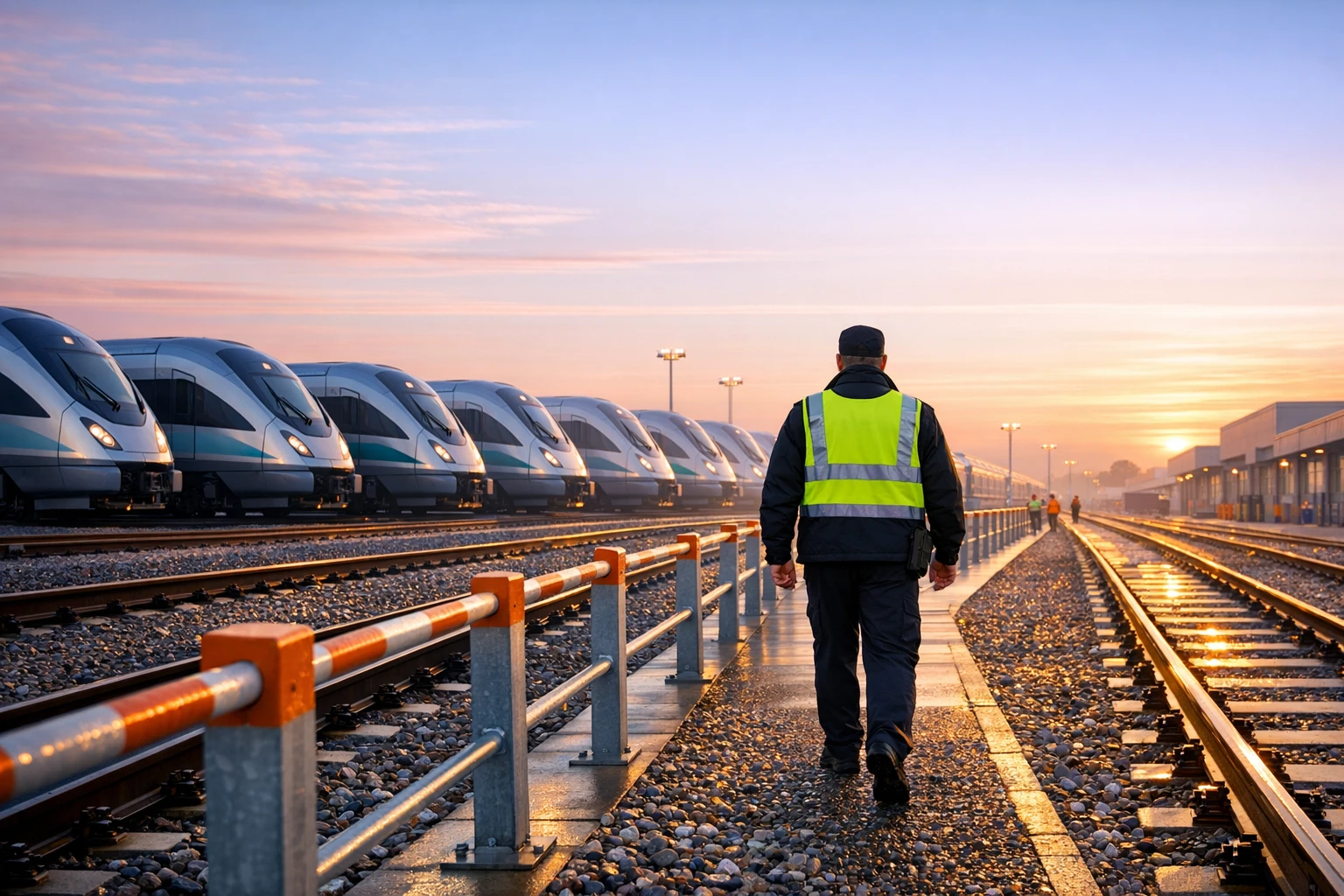
To an outside observer, night shift train security may look simple: a uniformed professional walking a platform, checking doors, or standing near ticket barriers. In reality, the role is broader and more dynamic. Overnight rail environments are quieter than daytime networks, but quiet does not mean predictable. The lower volume of passengers can reduce crowd pressure, yet it can also create longer gaps between witnesses, fewer nearby staff, and more responsibility for the security team on duty. A nearly empty station at 2 a.m. has a different rhythm from a packed commuter terminal at 8 a.m., and that difference shapes every decision.
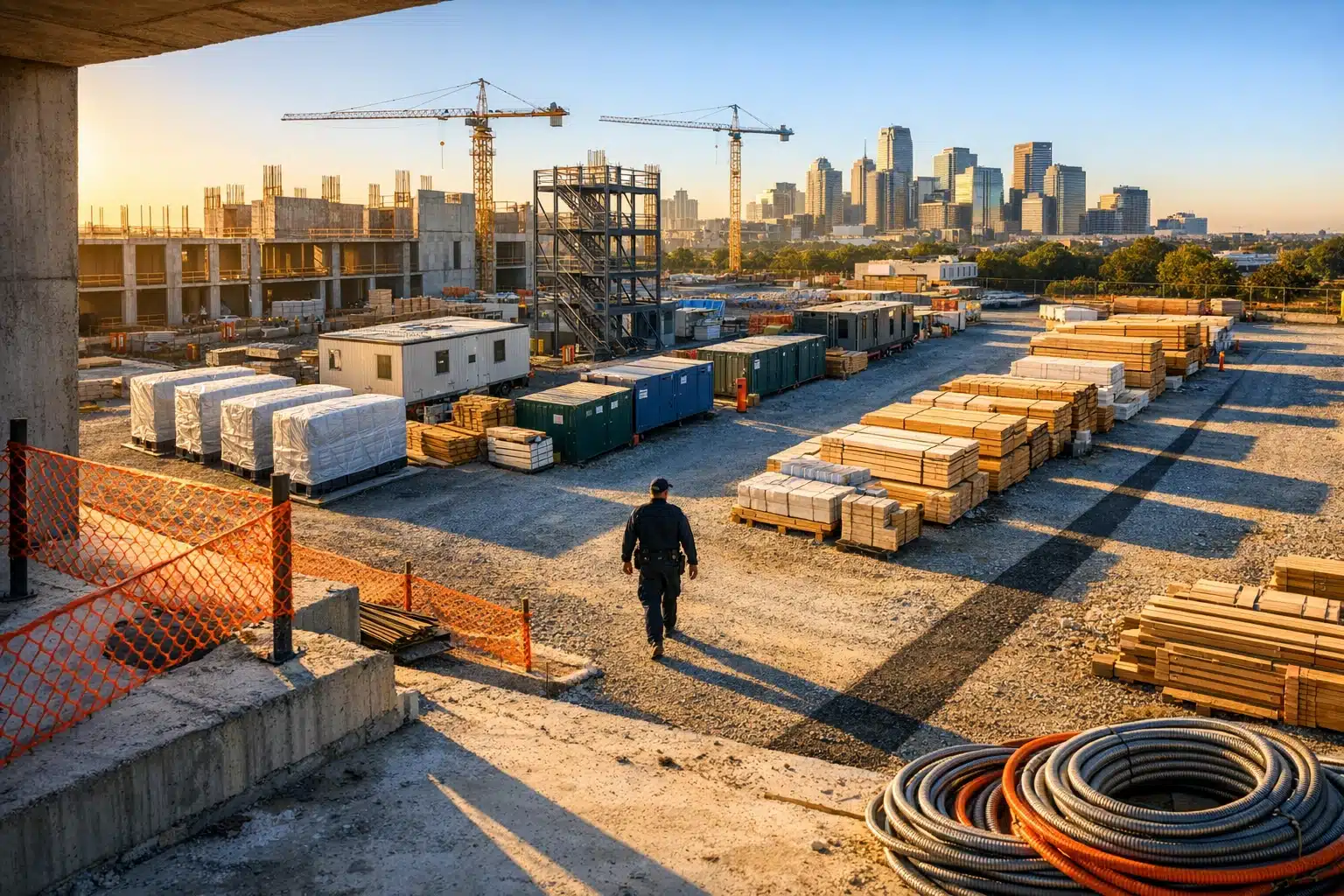
Night shift personnel may work in several settings. Some are based in stations, where their duties include patrols, access control, welfare checks, and response to suspicious behavior. Others work on board trains, especially on longer intercity or sleeper routes where passenger reassurance is part of the safety function. In freight or depot environments, the focus often shifts toward asset protection, perimeter checks, trespass prevention, and support during maintenance windows. Each setting requires attention, but the emphasis changes. A station officer may spend more time engaging with the public, while a yard-based officer may focus more on patrol discipline and restricted-area security.
Compared with day shifts, overnight work usually involves reduced staffing and a higher premium on independent judgment. Security officers often become the first point of contact for issues that begin as customer service problems and turn into safety matters. A lost traveler, an intoxicated passenger, an argument between strangers, a person sleeping in a waiting room, or an alarm from a closed access gate can all land on the same shift. The role therefore blends observation with intervention. Good officers know when to step forward, when to call for support, and when a calm conversation is more effective than a forceful stance.
Typical night duties often include:
- Patrolling platforms, concourses, parking areas, and access routes
- Monitoring CCTV feeds or responding to alerts from control rooms
- Checking that restricted doors, gates, and service corridors are secure
- Assisting vulnerable or stranded passengers
- Recording incidents accurately for supervisors, operators, or police
- Supporting evacuation or disruption procedures during service delays
There is also an important deterrence factor. A visible, professional presence can reduce opportunistic theft, vandalism, fare evasion, and disorderly conduct, especially in low-traffic periods. Still, deterrence is only part of the picture. The stronger measure of success is whether the officer keeps situations from escalating, protects people without unnecessary confrontation, and helps operations continue safely. After midnight, a platform can feel like a stage after the audience has gone home. In that setting, the security officer is not just a guard at the edge of the frame; often, they are one of the people keeping the whole scene steady.
2. Skills, Training, and Professional Standards for the Role
Night shift train security rewards people who can combine composure with practical judgment. Physical presence matters, but the idea that the job is mainly about looking tough is outdated. Modern rail security places far more value on observation, communication, report writing, conflict management, and procedural accuracy. The strongest officers are often the ones who can read a scene early, speak clearly under pressure, and document what happened in a way that stands up to review. Overnight work raises the bar further because there are fewer buffers: if staffing is lighter and supervisors are not always nearby, the individual officer must think well in real time.
Most employers expect some combination of licensing, background screening, and job-specific training, though requirements vary by country and operator. In many places, candidates need a general security credential before entering transport work. After that, rail-focused induction may cover site rules, emergency plans, evacuation routes, trespass risks, communications protocol, and customer interaction standards. Some employers also prefer or require first aid, CPR, or mental health awareness training, especially where staff may encounter vulnerable passengers during overnight hours.
Key skills usually include:
- Situational awareness and the ability to notice changes quickly
- Verbal de-escalation and conflict resolution
- Clear radio communication and concise incident reporting
- Understanding of access control, patrol routines, and escalation pathways
- Professional conduct with the public, colleagues, and emergency services
- Reliability, punctuality, and stamina for rotating or fixed night schedules
One of the biggest differences between rail security and more general guarding work is the blend of public-facing service and transport-specific risk. In a warehouse, the task may center on perimeter control. On a rail network, the officer may need to manage disorder, respond to a medical concern, direct passengers during a platform change, and preserve incident details for an operations review, all in the same shift. That mix makes communication especially important. A good night officer knows how to speak to a frightened traveler, a train manager, a maintenance worker, and a police unit without losing clarity or authority.
Professional standards also matter because security staff are highly visible representatives of the rail environment. Passengers often judge whether a station feels safe long before they assess technical features like lighting design or camera coverage. Tone, posture, and consistency influence that perception. An officer who greets people, gives direct instructions, and stays calm during disruption contributes to safety in both a practical and psychological sense. The role can be demanding, but it suits people who like structured responsibility, can manage shifting circumstances, and understand that real authority is usually quiet, disciplined, and well documented rather than dramatic.
3. Technology, Procedures, and Teamwork on the Overnight Rail Network
If old images of rail security bring to mind little more than flashlights and fixed patrol routes, the modern picture is much more layered. Night shift train security now relies on a combination of human judgment and technical support. CCTV systems, body-worn cameras in some operations, radio networks, digital reporting tools, access control systems, alarm panels, and control room coordination have changed how incidents are detected and managed. Technology does not replace the officer on the platform or in the carriage, but it does widen their field of awareness and create better records when something goes wrong.
CCTV is one of the most important tools, especially at stations with multiple entrances, footbridges, elevators, parking areas, and low-traffic corners. A camera can extend visibility, yet it is most useful when paired with an officer who understands the site and can interpret context. A person lingering near a gate may be harmless, suspicious, confused, or simply waiting for a ride. The equipment supplies images; the professional supplies judgment. Similarly, radios and control-room links allow teams to share updates quickly, which is essential when delays, track issues, or police requests reshape the shift without warning.
Overnight security also depends on procedures that reduce uncertainty. Strong operators do not rely on improvisation alone. They use patrol schedules, escalation matrices, lone-worker check-ins, incident categories, and response scripts that help staff act quickly under pressure. Common procedures often include:
- Regular timed patrols of platforms, stairwells, parking zones, and restricted doors
- Mandatory welfare check-ins for officers working isolated posts
- Defined steps for suspicious packages, trespass alerts, or medical incidents
- Joint communication channels with train crews, dispatch, maintenance teams, and police
- Post-incident documentation requirements for review and trend analysis
Teamwork matters just as much as equipment. A night officer rarely works in a vacuum, even when physically alone. Conductors, station staff, cleaners, maintenance workers, signallers, and transport police all hold pieces of the operational picture. A cleaner may notice a broken access point before security sees it. A train manager may report escalating behavior in a carriage before the train reaches the platform. A control room may spot a pattern across several stations that is invisible at ground level. Effective security teams build trust with these partners, because information moves faster when people respect one another’s role.
There is also a growing emphasis on data-led deployment. Some rail operators review incident logs to identify problem hours, recurring locations, and patterns tied to service disruptions or weekend traffic. That means patrols can be adapted rather than repeated blindly. In simple terms, modern overnight rail security is less about wandering and more about purposeful presence. The officer still walks the station, checks the train, and speaks to the passenger who looks uneasy, but those actions are now supported by systems that make the work more coordinated, accountable, and responsive.
4. The Real Challenges of Overnight Security and How Professionals Handle Them
Night shift train security can be rewarding, but it is not a soft-edged job. The challenges are physical, mental, and situational. The first is fatigue. Human alertness naturally dips during overnight hours, and rail environments can alternate between long stretches of routine and sudden bursts of urgency. That combination is tricky. A quiet platform can lull attention, yet a single radio call may demand immediate action. Good officers develop habits that protect concentration: they move with purpose, follow patrol structure, hydrate, use handover notes properly, and avoid drifting into passive observation.
Another challenge is the type of incident common at night. Daytime shifts may deal more with crowd management and rush-hour friction. Overnight work often involves fewer people but more ambiguity. Officers may encounter intoxicated passengers, distressed individuals, rough sleepers near station access points, domestic disputes spilling into public space, or travelers who are simply stranded after missed connections. Not every issue is criminal, and not every problem should be met with a hard enforcement style. The ability to assess welfare, risk, and proportional response is one of the clearest marks of an experienced professional.
There is also the emotional aspect of the work. Night staff sometimes meet people at fragile moments: a teen who has boarded the wrong service, a commuter whose phone battery has died, an elderly passenger disoriented after midnight, or a person in visible crisis. In those moments, security is about steadiness as much as control. The officer must protect the environment while remaining humane. That balance can be difficult, especially when time pressure, low staffing, or repeated exposure to distress wears down patience.
Common overnight risk factors include:
- Reduced staffing and longer response times to remote locations
- Limited witnesses in quiet areas or on late-running services
- Weather exposure on open platforms, depots, and trackside access points
- Higher likelihood of fatigue-related mistakes or missed cues
- Tension linked to alcohol, service disruption, or social vulnerability
Professionals manage these conditions through preparation rather than bravado. They learn routes thoroughly, keep communications equipment ready, maintain clear boundaries, and call for support early when an incident begins to tilt. They also understand reporting. Good reports protect staff and passengers because they create a usable record for management review, policing, and future planning. In many ways, that written record is the second half of the job.
One practical truth stands out: quiet is not the same as safe. A nearly empty station can feel peaceful, but it can also hide weak lighting, delayed assistance, and isolated corners where problems grow unnoticed. Skilled night security workers learn to read those spaces, not fear them. They respect the risks, use the procedure, and keep the atmosphere stable enough that the railway can keep moving long after most of the city has gone to sleep.
5. Career Paths, Entry Routes, and Final Advice for Aspiring Night Shift Train Security Professionals
For people thinking seriously about this field, the good news is that night shift train security can open more doors than the job title first suggests. Many professionals enter through contract security firms assigned to stations, depots, or transport hubs. Others join directly through rail operators, transit agencies, or specialist transport security providers. The starting point varies, but employers generally look for dependability, clean work habits, calm communication, and evidence that the applicant can handle public-facing responsibility. Experience in security, customer service, hospitality, emergency response, military service, or transport operations can all help, especially when candidates explain how those skills transfer to overnight rail work.
Pay and progression depend on location, licensing rules, union structures, shift premiums, and whether the role is contract-based or directly employed. Overnight schedules often come with additional pay incentives, though the exact level differs by employer. Career growth can lead to supervisory posts, control room operations, investigations support, compliance roles, training positions, or broader rail operations jobs. Some people use security as a long-term career track. Others treat it as a gateway into station management, transport policing support, or safety and risk functions.
If you are preparing to enter the field, it helps to focus on practical readiness:
- Research the licensing and certification requirements in your region
- Build a resume that highlights reliability, incident handling, and customer contact
- Be ready in interviews to explain how you stay calm and follow procedure
- Learn basic first aid and strengthen report-writing skills
- Understand that shift work affects sleep, routine, and social life, so plan accordingly
It is also wise to compare employers carefully. A rail operator with structured training, clear escalation policies, and good supervision may offer a far better experience than a job with vague expectations and minimal support. Ask about staffing models, lone-working arrangements, radio coverage, refresher training, and how incidents are reviewed. These details tell you whether the employer treats security as a professional function or merely as a visible checkbox.
For the target audience, especially job seekers weighing whether this path fits their temperament, the simplest summary is this: night shift train security suits people who are alert, patient, and comfortable with responsibility when the environment feels thinly staffed and slightly unpredictable. It is not glamorous work, and it is not easy work, but it can be meaningful, stable, and skill-building. You help create order where uncertainty tends to spread fastest. You become part of the chain that keeps passengers reassured, staff supported, and rail services operating safely through the longest hours of the night. If that mix of service, structure, and real-world pressure appeals to you, this career is worth a serious look.